Start from place, not planning. Grounding policy in cultural vitality.
In this reflective piece, Lia Ghilardi draws on her experience as a cultural planner to argue for a place-based and cultural vitality-focused approach to urban regeneration in cities, where local mapping of cultural DNA comes before strategy.
This article stems from both personal and professional reflection (and a small dose of frustration) regarding the shortcomings of culture-led urban regeneration strategies that have been in vogue across the West for the last twenty years. While these interventions were once highly popular, they increasingly feel outdated, partly because they remain uncritically anchored in a pre-2008 economic model, an era that assumed continuous growth and abundant leisure time.
In reality, as we navigate the intersecting crises of late capitalism — from climate breakdown to widening socio-economic polarisation — traditional urban growth models have proven not only obsolete, but actively destructive. Rooted in a linear, extractive logic, these paradigms treat land, resources and communities as infinite commodities to be exploited for short-term economic maximisation.
As a cultural planner passionate about spatial justice and the democratisation of urban lived space, I see that it’s more crucial than ever to rethink the narrative surrounding local development and urban regeneration. Overcoming this destructive paradigm requires advocating for a transition towards systems that mimic the holistic, self-sustaining balance of living nature, drawing from the ecosystem approach developed by the regenerative economics pioneer John Fullerton.
This means looking past balance sheets and instead focusing on a deeper kind of wealth, one that nurtures places and people, protects our ecosystems, and brings vitality to the entire living fabric of a community.
Re-examining the creative city
To cultivate vitality, we must look beyond surface-level adjustments and ask deeper questions about how our cities are constructed. In particular, we must re-examine the top-down ‘creative city’ approaches long favoured by civic leaders across the political spectrum. Such approaches are frequently transplanted with limited regard for local specificities and cultural vitality, reducing initiatives to engines for real-estate speculation. Concurrently, they also overlook unintended consequences, for example, over-tourism, civic alienation and accelerated community fragmentation.
As a city-making specialist deeply engaged with the future of our communities, I believe that navigating these challenges requires a radical shift in how we understand culture, and specifically its unique capacity to cultivate ground-up resilience.
Seen this way, culture is far from a passive, commercial pursuit; it is foundational to cultivating authentic, regenerative urban processes where active engagement acts as a direct catalyst for a sense of care and belonging, ultimately building the capacity for citizenship. From here, we can move on to pilot adaptive forms of governance.
Cultivating true cultural vitality
True cultural vitality isn’t something city leaders can manufacture. It’s a living fabric woven organically by people through their spontaneous conversations, shared (or contested) histories and their daily routines. By treating our communities as living, interconnected habitats, we can co-create policy frameworks that offer the flexibility to evolve the cultural vitality that is already present in every place.
But how do we deliver such a vision in practice? While past policymakers often overlook a place’s uniqueness, it is precisely by mobilising this distinctive cultural DNA that we start to build sustainable, cohesive and creative cities.
Using mapping to uncover a place’s true character
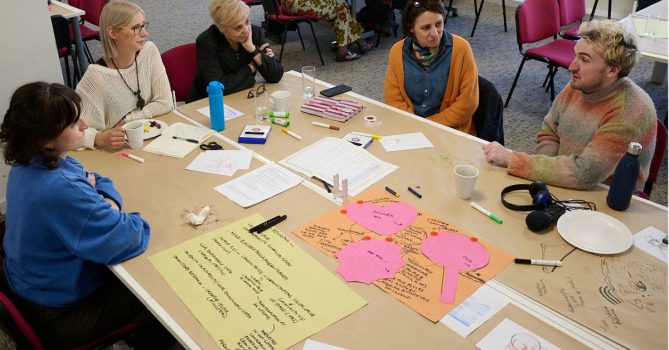
In my work, I use participatory tools, such as urban and cultural DNA mapping, to uncover a place’s true character while also documenting the full breadth of its cultural life before formal strategies are drawn up by municipal departments.
In his seminal work, The Practice of Everyday Life (1984), cultural critic Michel de Certeau distinguishes between strategies and tactics. He argues that strategies (e.g. urban strategies for regeneration or cultural development) are the formal tools of the powerful (those in government) while tactics serve as the response of the weak (the citizens), and those wielding the former are constantly in competition with those utilising the latter.
By using short-term, low-cost, open and iterative processes such as mapping, we seek to provide platforms that bridge the gap between top-down strategies and tactics while also building on the creative potential unleashed by social interaction.
As power continues to devolve to cities and regional leaders, and mission governance (an approach where governments set bold, society-wide goals, while coordinating public and private sectors to achieve them) is increasingly seen as the answer to old-style policymaking (Mazzucato, 2021), local DNA mapping emerges as a vital tool for delivering municipal mandates.
By actively engaging a diverse spectrum of stakeholders and welcoming previously unheard voices into the local governance landscape, this mapping framework serves as a collaborative platform. It translates grand, cross-sector ambitions into meaningful, community-owned action, allowing city leaders to operationalise the fundamental requirement that bold public leadership must always be anchored in grassroots reality.
Putting theory into practice with proven results
This is not just a theoretical framework; it is a proven approach. Over the last two decades, I have worked with cities that have experienced firsthand the benefits of applying collaborative frameworks to inclusive urban growth, community development and cultural vitality assessment. Despite starting from different baselines — some were facing population shrinkage, while others struggled with urban dereliction and social segregation — they all wanted their communities to actively contribute to shaping a vision for the future.
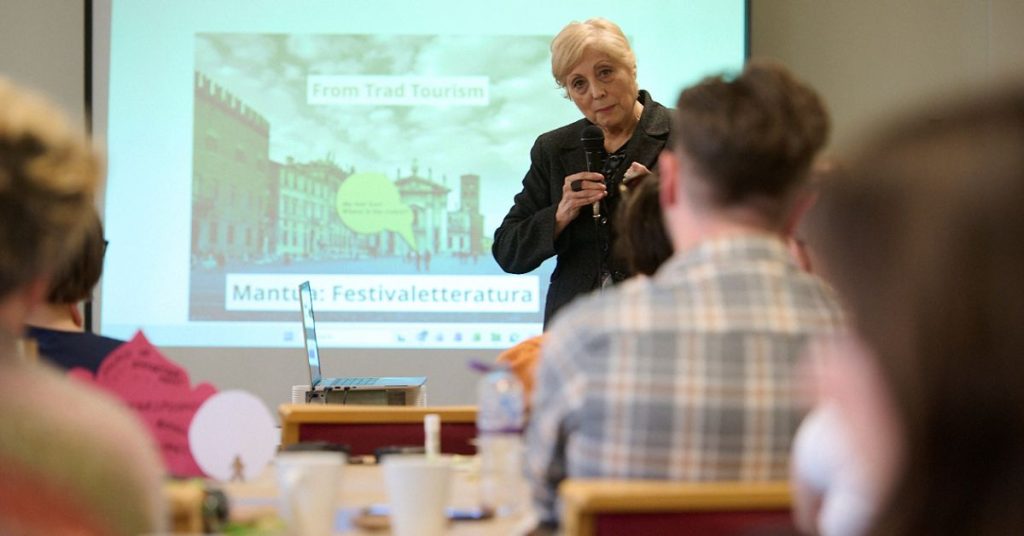
My work with the Italian town of Mantua perfectly illustrates this approach in action. Mantua was trapped in a cycle of mass, unsustainable one-day tourism. To break this pattern, I led a holistic reassessment of the town’s unique assets, looking past its physical monuments to map its deeper cultural DNA.
By mobilising the city’s historic architecture alongside its deep-seated traditions of civic debate, public conviviality and a genuine, localised passion for books and reading, we strategically pivoted its identity and long-term potential for growth. This process led to the creation of the annual Literature Festival, Festivaletteratura, successfully transforming Mantua into a vibrant and internationally recognised hub for publishing, creative writing and pioneering models of active, adaptive heritage.
In Zlin (Czech Republic), this methodology enabled the strategic mobilisation of the city’s unique functionalist architectural and design heritage. These particular assets had previously been underutilised by local cultural policies, which had instead historically prioritised traditional heritage conservation and broader, conventional creative-city frameworks.
By actively shifting the focus, this intervention brought an entirely new lens to nurturing, incubating and retaining creative talent within the region. Simultaneously, it enhanced the city’s image by proactively transforming redundant functionalist industrial buildings into dynamic spaces used for hosting vibrant cultural, educational and civic functions.
More recently, I have been working with the city of Esch-sur-Alzette (Luxembourg). Over five years, I have engaged different layers of local stakeholders and communities in mapping processes to continuously update the city’s cultural development framework. In this diverse city, where over 120 languages are spoken, the task is to bridge its heavy industrial heritage with a modern, knowledge-based future to foster an inclusive and equitable place to live.
In this context, cultural mapping creates continuous feedback loops that facilitate real-time course corrections and embed transversal approaches to urban planning, cultural and tourism policies. A core component of this continuous engagement process in Esch-sur-Alzette is Nuit de la Culture (Night of Culture). While typically an annual event, in 2022 it was staged three times coinciding with Esch’s designation as a European Capital of Culture.
With local associations and citizens groups becoming Grands Rêveurs (Great Dreamers) and cultural activity decentralised into everyday spaces and local neighbourhoods, “La Nuit” isn’t just an event on a calendar; it is an ongoing, collective ritual where the municipality and its people reclaim public spaces, reinforce social inclusion and quite literally dream the future of their city into existence.
Events like Nuit de la Culture serve as visible milestones rather than endpoints, consolidating ongoing processes, making civic participation publicly legible, and deeply reinforcing civic pride and shared ownership.
Making the connection
Ultimately, this is about transforming urban governance. The cultural mapping exercises conducted across these diverse locations do more than collect data; they provide a non-hierarchical platform for amplifying diverse community voices and meanings, while also fostering an environment of learning through doing. By directly connecting grassroots evidence to strategic decision-makers, we can ensure that local lived experiences actively inform and shape future policy.
Lia references the following texts in her article:
- De Certeau, M. (1984). The Practice of Everyday Life. University of California Press.
- Mazzucato, M. (2021). Mission economy: A moonshot guide to changing capitalism. Allen Lane
Lia Ghilardi is a creative polymath based in London. As the founder and director of Noema, a globally minded organisation, she is at the forefront of reimagining cities through her unique approach to combining place and community mapping with strategic cultural planning. With over twenty-five years of experience, she regularly consults with mayors, urban designers, architects, and arts organisations, offering advice on creating vibrant, cohesive and sustainable places. Her innovative solutions have helped over 100 cities worldwide become more liveable, attractive, and culturally diverse. She is a member of the Academy of Urbanism and a Fellow of the Royal Society for the Arts.
Find out more about Lia’s work | Connect with Lia on LinkedIn
Discover more about the Centre for Cultural Value’s cultural vitality research
Top Image: Lia Ghilardi presents at a Cultural Vitality Lab with Norwich Creative City Compact. Photo by Andi Sapey.
Related news
Societal Readiness: Could it change how we think about cultural activity?
Beyond the bailout: What Italian opera houses reveal about cultural policy
Creative methods, cultural vitality and relational consultation practice

New report: Transforming the Cultural and Heritage Sector’s Data Infrastructure
Cultural Vitality Labs: Placing participatory research and co-production at the heart of cultural evidence