Empowering Youth Researchers: how handing over the research reins reveals fresh perspectives and deeper insights
What happens when young people don’t just take part in a project but influence the way in which we understand its impact? That’s the question at the heart of PhD researcher Ava Podgorski’s reflections on the Speak Up Youth Researcher initiative, a bold example of peer research in schools as part of a wider National Theatre-led youth programme.
What is peer research, and why does it matter?
Peer research flips the traditional research model on its head. Instead of researchers asking the questions and interpreting the answers, people with lived experience become the researchers, shaping the questions, choosing the methods and analysing the findings. In the context of projects taking place in school settings, it’s young people who are centred in the research process. This approach to research and evaluation aligns with the Centre for Cultural Value’s Evaluation Principles, valuing insider knowledge and creating space for authentic voices, while also empowering young people through recognition and leadership.
Their research, their words
At Outwood Academy City Fields, a small cohort of Speak Up students volunteered to become “Youth Researchers,” a term they chose to reflect their growing expertise and agency. In bi-weekly, one-hour sessions, the team of Youth Researchers developed research skills, debated youth voice and research rights and designed their own research study.
Rather than sticking to surveys, they opted to explore creative data collection – drawings, Lego models, photography and word associations – giving participants choice and making the process fun and inclusive.

Their choice of research question centred on the theme of courage, with the Youth Researchers agreeing on their own definition for this core concept: self-belief, bravery, confidence, self-expression, self-value.
They developed the imagery of a dandelion, which became their metaphor for growth and ambition. Visualisation became an important part of their approach when explaining the research to peers. Having this clear dandelion metaphor ensured that the Youth Researchers could effectively communicate what they were asking their peers to reflect upon, aiding their description of the research task.
They selected two research methods – photography and drawing – aiming to capture their peers’ reflections on how their courage had grown through participating in the Speak Up programme and where they hoped it would take them in the future. Offering two methods was important to the Youth Researchers, ensuring that participants felt they had a choice and could be confident in how they chose to express themselves:
We chose to offer two methods because we felt this gave participants a choice for how they wanted to be creative. For example, if a student was not confident drawing, being asked to do so could make them feel at a disadvantage – even though we were not judging their art, it could have felt like that.
Following data capture sessions with their peers, the Youth Researchers analysed the data. Findings revealed a clear journey from isolation and low confidence to growth, openness and future aspirations. As one Youth Researcher put it:
I believe that young people’s courage has been improved and will continue to grow.
Taking it a step further, the Youth Researchers also reflected on their own research processes, demonstrating a rigorous and robust approach to evaluation.
Experts in their own right
Between September 2024 and May 2025, the Youth Researchers also acted as consultants for the National Theatre’s own Speak Up survey, which was circulated to all participants across the Speak Up regions.
As consultants, they suggested various changes to the survey’s language and format and offered broader feedback on the survey process. One interesting suggestion was to include open-text boxes alongside multiple-choice questions, prompting respondents to comment on their answers. The Youth Researchers “felt this might help get more information from students”.
The Youth Researchers thought that their peers would have insights to share, and the use of mixed methods to capture both quantitative and qualitative data within the survey proved impactful, with many students choosing to include valuable additional comments that offered further insights into their perspectives.
Platforming peer voices
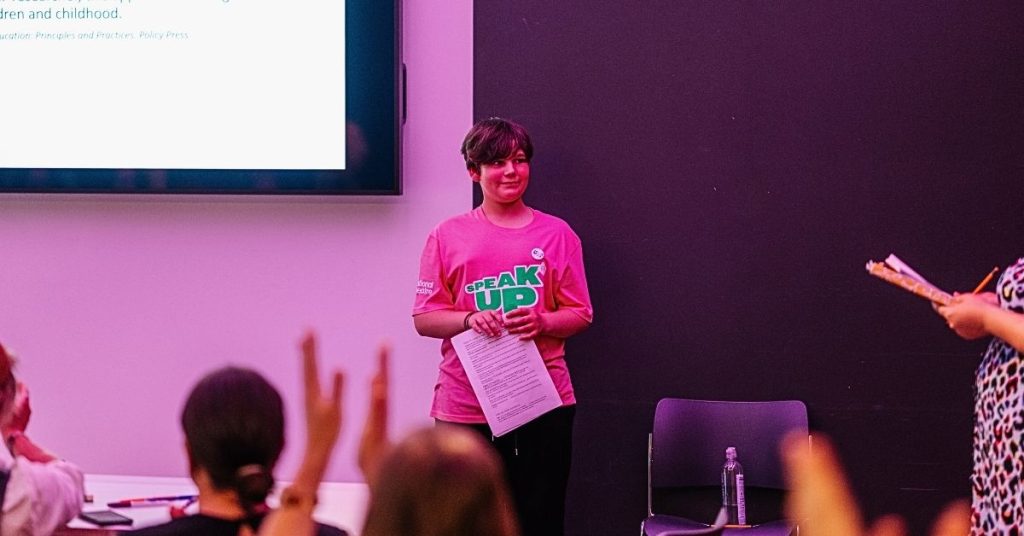
A significant ambition for Speak Up was to platform the voices of young people, including the work of the Youth Researchers who were invited to present at the National Theatre’s Speak Up: Arts Everywhere Symposium in July 2025.
Together they prepared and delivered a workshop for arts and education sector stakeholders, sharing their experience, the research findings and reflecting on the Youth Researcher programme.
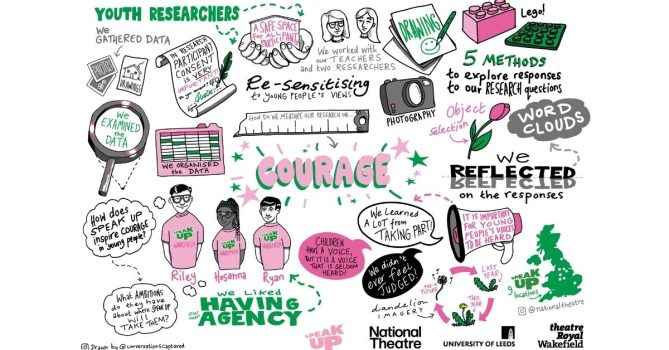
The team of Youth Researchers also shared their presentation with local arts, culture and heritage sector practitioners at an event at the Theatre Royal Wakefield. A live illustrator captured the themes from the discussion, with the final illustration serving as an impactful and engaging way to communicate the project to young people. They were thrilled to see themselves and their work represented in this way.
Why peer research matters for arts and culture
For arts practitioners and cultural organisations, this project serves as a blueprint for co-produced evaluation. It shows that when young people lead, the insights are richer, the language more authentic, and the impact deeper. The Youth Researchers didn’t just collect data; they influenced survey design, presented at national symposia and led interactive workshops for professionals.
Beyond research skills, the Youth Researchers also reported increased confidence, resilience and creativity. They felt heard, valued and proud to contribute to something real. As one student remarked, “making research for everyone is satisfying”.
What can we learn as cultural practitioners?
If you’re working in arts education or cultural engagement, consider how peer research could transform your evaluation practice. It’s not just about gathering feedback. It’s about sharing power, amplifying youth voice and creating space for creativity in research.
Peer research isn’t just an evaluation tool; it’s a way to embed youth voice at the heart of cultural practice. When young people lead, the process becomes more authentic, inclusive and transformative.
If you’re inspired to try peer research, here are some practical steps from our learnings through the Speak Up Youth Researcher project:
- Start small and voluntary
Invite a small group of young people who are interested in shaping the project. Voluntary participation ensures genuine engagement. Flexibility around session timings can be beneficial, but regular involvement is key to ensuring development.
- Provide training and support
Begin with sharing basic research skills, such as question design, ethics and consent, with a focus on gradually moving towards facilitation skills. Shift from “teacher” to “guide” as confidence grows.
- Co-create the questions
Let young people decide what matters to them and guide them in defining their terms. Their priorities will often reveal insights adults might overlook.
- Use creative methods
Offer options beyond surveys, such as drawing, building, photography, storytelling and interviews. This makes research accessible and fun.
- Share power and credit
Involve youth researchers in analysis and presentation. Recognise their contributions publicly through events, reports and social media.
- Reflect and adapt
Peer research is iterative. Build in time for reflection and be ready to adapt methods based on feedback.
Ava Podgorski is a PGR student supervised by the Centre for Cultural Value (Professor Ben Walmsley and Professor Leila Jancovich) within the School of Performance and Cultural Industries at the University of Leeds. Her PhD explores the issues of evaluation, learning and legacy in relation to Cities of Culture via a case study of Leeds 2023, the city’s dedicated year of culture. Ava’s PhD research is funded by a scholarship from the University’s Faculty of Arts, Humanities and Cultures. Between March 2024 and December 2025, Ava was a Research Assistant for the University of Leeds’ evaluation of the National Theatre’s Speak Up project. Ava’s professional background is in Arts and Music Education, and she is proud to be a trustee for Mahogany Opera Group.
The National Theatre Speak Up programme ran for four years in 56 schools across 11 areas. The programme invited young people to explore issues important to them by co-creating new artworks with their teachers and local artists. Discover more about Speak Up.
To find out more about evaluation, co-creation and creative methods, take a look at the following resources:
Related news

Societal Readiness: Could it change how we think about cultural activity?

Beyond the bailout: What Italian opera houses reveal about cultural policy
Creative methods, cultural vitality and relational consultation practice
Start from place, not planning. Grounding policy in cultural vitality.

New report: Transforming the Cultural and Heritage Sector’s Data Infrastructure