Societal Readiness: Could it change how we think about cultural activity?
This article was originally published by Arts Professional in September 2026.
Cultural projects are often expected to transform people and places, but without the necessary conditions. Stephen Dobson explores how the concept of Societal Readiness might help the sector identify the conditions that make lasting change possible.
Arts and cultural sector activities can be thoughtfully designed, well delivered and positively evaluated, yet still struggle to sustain lasting change. But the problem doesn’t always lie with the project itself; we need to think about whether the wider conditions were in place for change to happen.
Context is crucial; we have all seen the impact when communities do not yet trust the organisations involved, partners lack the capacity to act on what they learn, and policymakers value the evidence but have no mechanism for incorporating it into planning or funding decisions.
Concept of readiness
The concept of readiness has long been used in technological innovation, measured on a scale called the Technology Readiness Level (TRL). This provides a structured way of assessing how far a new technology has progressed from initial concept to real-world application. Originally developed by NASA in the 1970s, the scale offers a practical way to judge whether an innovation is ready to move beyond the laboratory and how close it might be to real-world application.
However, technological maturity alone cannot explain why some innovations succeed while others stall. A technology may work perfectly in a laboratory but still fail because people are reluctant to adopt and integrate it into everyday life. This gap between innovation and society has prompted researchers to explore a complementary concept of Societal Readiness. The Little Book of Societal Readiness explores what it takes for new ideas to fit into everyday life and society.
Societal Readiness considers whether an innovation is ready by helping to identify whether the surrounding people, organisations and systems can engage with it and sustain it. The concept offers a potentially valuable lens for examining something that conventional project evaluation can overlook: the wider conditions that make change possible. At the Centre for Cultural Value, we are exploring what the cultural sector might learn from Societal Readiness and how the idea could be adapted for understanding cultural policy and practice.
Social innovation
A new arts and cultural programme, partnership or policy can be understood as a form of social innovation that attempts to change experiences, relationships, behaviours or systems. Cultural initiatives are increasingly expected to improve health, revitalise places, influence climate action, support young people’s skills development, or build more cohesive communities. Yet while there is a focus on societal outcomes, planning and investment often concentrate only on the design, delivery and immediate effects of an activity, paying less attention to whether the people and institutions around it are able and willing to facilitate and act on what it produces.
Like every innovation, cultural interventions are more likely to create lasting change when people, organisations, funders and institutions can engage, respond and move work forward. This leads us to consider: what conditions need to exist before impact becomes possible?
Stephen Trudgill’s Barriers to a Better Environment outlines that these conditions may be due to a lack of awareness or willingness to engage. Or perhaps there is reluctance to accept the legitimacy of the innovation and trust those behind its implementation. Alternatively, the intended audience might not be willing to change its behaviour or adapt to incorporate the innovation. Finally, policy and institutions may be barriers to impact.
For example, imagine a cultural programme intended to increase young people’s influence over local decision making. The workshops may be excellent; participation may be high with young people reporting greater confidence. But its wider impact will remain limited if trust in the decision-making institutions involved is low, if council officers have no route for responding to their recommendations, or if funding ends before sustainable relationships have had time to develop. The programme may have succeeded on its own terms while the wider system remained unable to respond.
Experienced practitioners know that the same initiative will encounter different conditions in different places. One neighbourhood is ready to co-design cultural infrastructure, while another needs time and investment to build trust. A local authority may support evidence drawn from cultural experience but lacks the capacity or political support to embed it in decision making. These are not peripheral delivery issues; they are real-world risks that shape whether cultural activity can move from a stand-alone project to sustained change.
Five dimensions of Societal Readiness
At the Centre, we are exploring five connected dimensions of readiness. These are intended as prompts for practitioners, partners, funders and policymakers to identify where further attention or investment may be needed.
- Awareness
Readiness begins with communities and partners helping to define the challenge, not simply being informed of a proposed solution. Is there a shared understanding of the issue, why it matters and what needs to change? - Engagement
Are the people affected meaningfully involved in shaping the work and its decisions? Who has influence, who is missing, and does participation extend beyond one-off consultation? - Acceptance
Is the approach trusted and regarded as legitimate by those involved? Are concerns, competing perspectives and questions about the evidence being openly discussed? - Adaptation
What changes will be required from communities, delivery organisations, partners and decision makers? Are they willing and able to work differently? Do they have the time, resources and authority to respond to learning and incorporate it into future decisions? - Institutional readiness
Can the relevant institutions use, support and sustain the change beyond the funded project? Are responsibility, resources and routes into policy or established practice clearly identified?
Considering these dimensions shifts attention away from the assumption that a project’s success rests solely with its delivery team and instead considers the importance of surrounding relationships, resources, policies and institutional systems. This does not remove responsibility from cultural organisations or make delivery quality less important; it simply recognises that systemic outcomes are jointly produced.
Who is responsible for impact?
Assessing Societal Readiness in the sector has implications for funding and policymaking as well as delivery. Cultural organisations are frequently commissioned to address complex challenges through short-term projects, while the trust, infrastructure and institutional change required to sustain their impact remains unfunded.
Considering Societal Readiness exposes assumptions built into this model. Are funders allowing enough time for relationships to develop? Are public bodies prepared to act on the evidence they request? Do partner organisations have the resources to change their practice? Are policies aligned with the outcomes that programmes are expected to achieve?
This also raises fundamental questions about how we measure and understand cultural value. Before asking whether culture works, we also need to ask whether the conditions are right for change and acknowledge that cultural organisations cannot produce systemic change alone, no matter how well they design and deliver their work.
Exploring Societal Readiness could help practitioners, funders and policymakers distinguish between a poorly delivered project and one operating within a system not yet equipped to respond. More importantly, it could show where investment, relationship building or institutional change is needed before greater impact becomes possible.
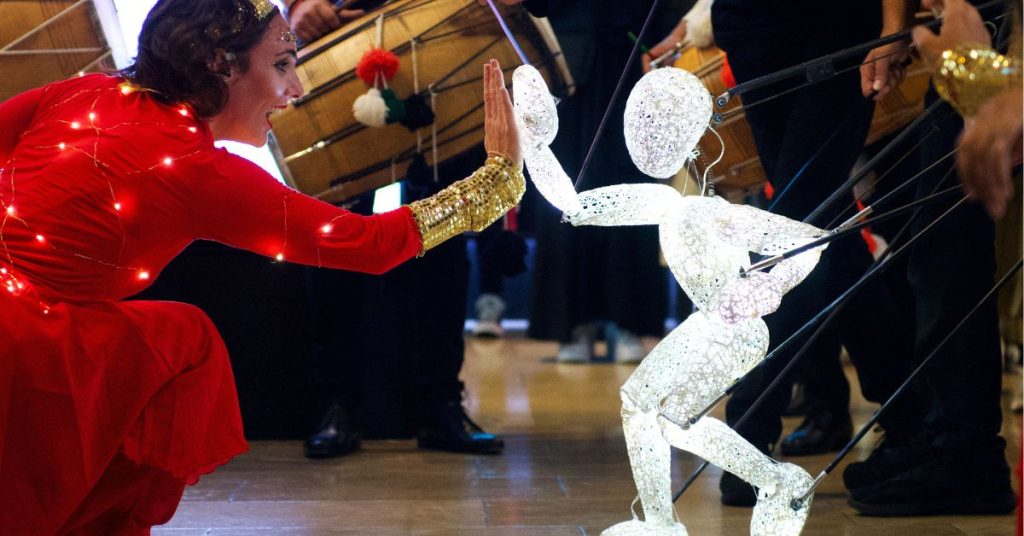
Image credit: DUNDU Sharing The Light in Birmingham. Photo by John Bray. Courtesy of Global Streets/Festival.Org
Related news
Beyond the bailout: What Italian opera houses reveal about cultural policy
Creative methods, cultural vitality and relational consultation practice
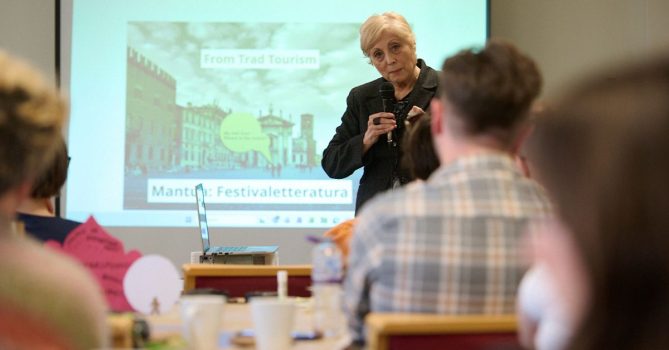
Start from place, not planning. Grounding policy in cultural vitality.

New report: Transforming the Cultural and Heritage Sector’s Data Infrastructure
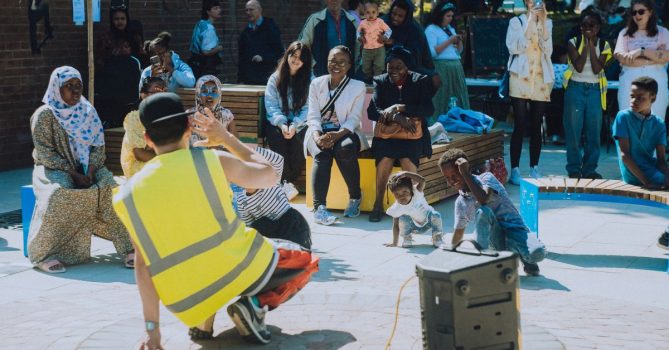
Cultural Vitality Labs: Placing participatory research and co-production at the heart of cultural evidence