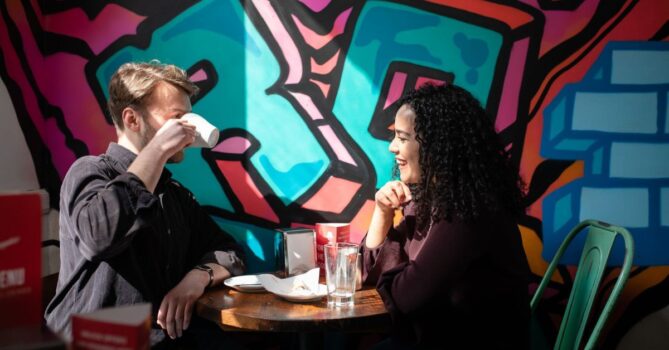
When two worlds collide

We asked our recent podcast guest Mike Chitty to reflect on what happens when you bring the different worlds of culture and health together.
My perspectives are informed by my background in leadership development in the health and social care sector, but with a strong crossover into arts, play and identity. In my conversation with Robyn Dowlen on the Reflecting Value podcast, I quickly rejected the notion that culture and health are different worlds. They are both shimmering parts of my world with edges that blur into each other, and for that matter, into just about everything else: science, faith, ethics, the economy, environmental and social justice. There is one system and everything is connected. Art and culture can help us to grasp that.
What really interests me though is that most of what we spend on health and wellbeing through the NHS (something like £130bn a year), is actually spent on illness management. And a lot of that illness is created by lack of connection to self-expression, belonging, community, culture and purpose. All those things that meaningful engagement with arts and culture helps to generate.
Essentially what I see is the arts and cultural sector sniffing around for the crumbs around the table of the health and social care budget, but it could be the other way around. By investing much more of that money in arts, health and wellbeing creation, we could enable people to live lives that they value and therefore with less addiction, less depression and less alienation. In short, we could establish a very different community and society. We need a radical approach to how we create health and wellbeing, by supporting arts and cultural programmes to do what they do best – help people to feel that sense of belonging and connection.
The examples I’ve come across that bring culture and health together in a meaningful way aren’t directly about reducing clinical intervention and other similar measures. Over the last decade, I’ve been involved with Solace, an organisation that supports refugees and asylum seekers who are survivors of deep trauma with psychotherapeutic interventions. But what really moves me is the profound work they do that complements the psychotherapy. There’s conversation, art and food and these things aren’t hived off as health interventions. One of the reasons why this place is so successful is because people go because they feel like they belong. They’re treated as people, not as symptoms, illnesses or problems.
Success stories like this fly under the radar. But they are people engaging meaningfully with culture, developing their own modes of self-expression and connection, which often leads to healing. I believe we’re capable of looking after ourselves much more when we are given access to connection, community and culture. It’s when we are denied access to these things that we begin to need more clinical interventions.
There’s also lots of good practice emerging around social prescribing, although my fear is that the more it is seen as good practice, the more it will be captured and owned by the illness management system.
Ultimately, art and culture could help us find the way to sustainable, healthy and happy lives on personal, familial, communal, national and global levels. This is what we should be aiming for, rather than political and economic misdirection leading us to see art and culture reduced to an illness management coping strategy.
Mike Chitty is a trainer, coach and consultant with experience in the health and social care sectors. Until 2018 Mike was Head of Applied Leadership at the NHS Leadership Academy. There he led the design and delivery of leadership development interventions to a wide range of teams and communities in the NHS, social care sector and related arms-length bodies including NHS England and NHS Improvement.
You can hear Mike’s interview with Robyn Dowlen on Episode One of Reflecting Value: Bringing two worlds together.
Image: Move Dance Feel – a dance project for women affected by cancer – founded by Emily Jenkins. Photo: Camilla Greenwell
Related news
Cultural Vitality Labs: Placing participatory research and co-production at the heart of cultural evidence
Building the next chapter
Empowering Youth Researchers: how handing over the research reins reveals fresh perspectives and deeper insights
Rethinking Audience Spectrum through a cultural vitality lens
Junction Arts: Fifty years of creative placemaking